














Don’t Wait for Diesel Prices to Return to “Normal”
If you’re waiting for diesel prices to return to “normal” before making your next fleet decision, I wouldn’t count on a quick reset.
The national average price of diesel peaked at $6.53 per gallon this fall. And while prices will eventually ease, history shows that major disruptions to the global oil market can have lasting effects.
This time around, conflict in the Middle East has disrupted oil production and trade routes, while attacks on Russian refineries have added further pressure to global diesel supplies. Even as some crude oil flows begin to recover, diesel remains especially tight. The International Energy Agency says rebuilding depleted inventories is unlikely before the second half of 2027.
Past fuel-price spikes reinforce the same point.
| Time Period | Peak National Diesel Average | Primary Catalyst(s) |
| Fall 2026 | $6.53/gallon | Middle East conflict and disrupted oil flows, compounded by reduced Russian refinery output |
| June 2022 | $5.81/gallon | Russia’s invasion of Ukraine, sanctions and already-low global diesel inventories |
| Summer 2008 | $4.76/gallon | Record crude oil prices as strong worldwide demand collided with tight global supply |
And even when the event driving a price spike begins to ease, the market does not immediately rebound. Refinery output must recover. Inventories have to rebuild. Trade routes and supply chains need time to normalize.
Fuel-price volatility also isn’t the only cost pressure facing diesel fleets. Model-year 2027 brings more stringent federal heavy-duty emissions requirements, adding another consideration for fleets already managing increasingly complex and expensive diesel technology.
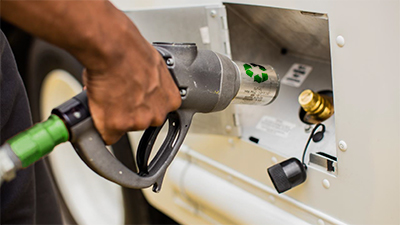
That is why I continue to encourage fleet managers to look beyond what diesel might cost six months from now and focus instead on the factors they can control today. Propane autogas gives fleets a domestically produced fuel with historically stable pricing, lower operating costs and less exposure to global volatility.
Fleets operating propane today are seeing up to $.50/mile in savings compared to their diesel assets.
Waiting for diesel prices to return to “normal” is not a strategy.
Building a fleet that is less vulnerable to that volatility is.
Here’s what I’m reading this month:
