
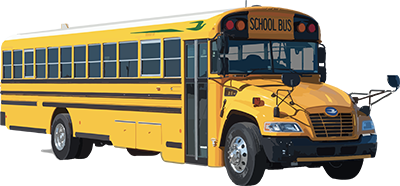
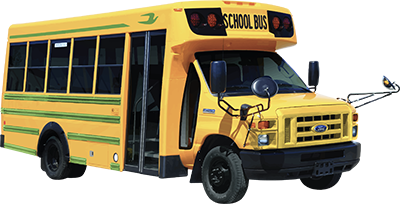







10.20.2025 – During National School Bus Safety Week, organizations from across the country are joining together, including Michigan Association for Pupil Transportation, the National School Transportation Association, Roush Fenway Keselowski (RFK) Racing, Blue Bird Corporation and ROUSH CleanTech are joining the nationwide call to remind motorists that stopping for a school bus is not optional—it’s the law and a matter of life and death.
According to the Propane Education & Research Council, there are more than 7,000 propane paratransit buses across the United States.
Seventy five of those buses are in Kitsap County, outside Seattle.
Butler County RTA adds propane buses to fleet
Butler County Regional Transit Authority has added propane buses to its fleet, marking another step toward the agency’s sustainability and efficiency goals.
Last week, three new propane-powered buses arrived in Butler County as the first three for the agency as it grows the mixed fleet of gasoline and low-emission vehicles.
10.15.2025 – Boys and Girls Club of Martin County continues to prove the long-term value and reliability of propane bus transportation by operating the original Blue Bird Vision bus equipped with ROUSH CleanTech propane fuel system. This first of its kind propane school bus has continually operated in the organization’s daily operation since 2014.
The 15th anniversary is traditionally marked with crystal, symbolizing transparency, clarity and brilliance — qualities that perfectly reflect what we’re celebrating this month at ROUSH CleanTech. For 15 years, we’ve built a foundation of transparency in our operations, clarity in our products, and enduring relationships with our customers and partners. This milestone is not just about the years — it’s about the journey, the people and the progress that have brought us here.
Increasingly our energy future is not a one-size fits all, but rather a mix of traditional technologies like combustion engines using traditional and renewable fuels as well as new fuels. That is nowhere more evident than the transportation sector.
A fleet of red Hope Network buses idles outside the Amway Grand Plaza Hotel in Grand Rapids, ready to take Ms. Wheelchair America contestants out on the town.
The unassuming transports look like any other fully accessible bus, but reports highlight a statewide trend toward the vehicles’ clean emission and quiet hum.
As public entities, transit agencies have a big job: connect people, jobs and communities via safe modes of transportation. With finite, government-funded budgets, these organizations must be judicious in how they maximize fixed operational dollars while also doing mission-critical work. For over 15 years, we’ve seen a growing and important trend in the transit industry: adopting propane buses as a valuable way to save operational funds.
The Bibb County School District has updated and upgraded its bus fleet with 15 electric buses and 10 propane buses through a federal grant from the Environmental Protection Agency.
The school district decide to seize the opportunity to improve its fleet for cost, environmental and health reasons.
As kids and families gear up for another school year, if they’re not already back in school, it’s important for everyone to keep safety at top of mind.
The “danger zone” is 10 feet all around the bus. Drivers need to be aware the bus could move or stop at any time. Only walk up to the bus when the driver can see you and you can see them.


